Plant Pathology | About Us | Faculty Directory | Faculty Pages You are here

David M. Geiser
Professor of Plant Pathology
121 Buckhout Laboratory
University Park, PA 16802-4506
Phone: 814-865-9773
E-mail: dgeiser@psu.edu
Areas of Interest
Director, Fusarium Research Center; molecular evolutionary genetics of pathogenic and toxigenic fungi.

Education | Program Interests | Publications

Education
B.A., Ecology and Evolutionary Biology, Northwestern University
Ph.D., Genetics, University of Georgia
Program Interests

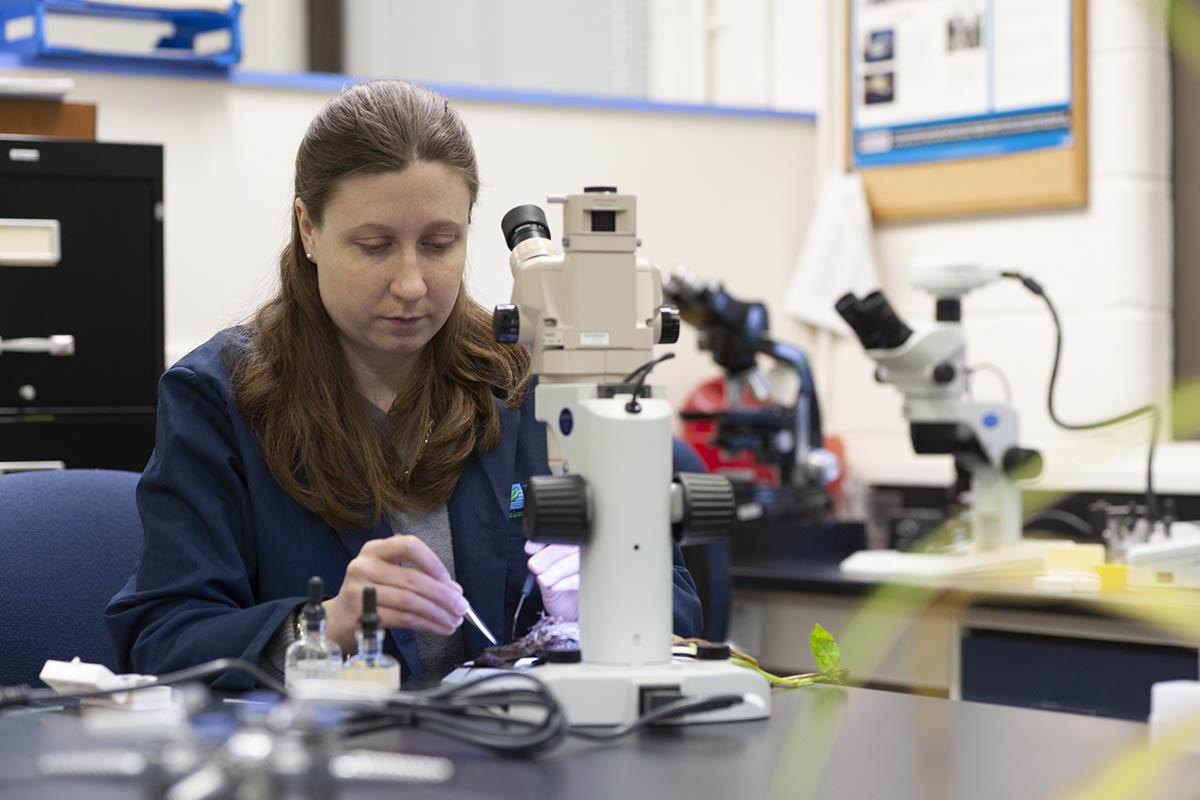
Research in my lab focuses on the molecular evolutionary genetics of fungi, mostly in the realm of molecular phylogenetics and systematics at the species level. We apply these tools mostly to identify and better understand the fungal culprits in plant and animal diseases and toxicoses. Unfortunately, identifying fungi using traditional micromorphological tools is very difficult, and tends to lead to species concepts that are too broad. We use the tools of multilocus molecular phylogenetics to recognize and identify species, which provides a much more objective and reliable framework for understanding the biology of these fungi.

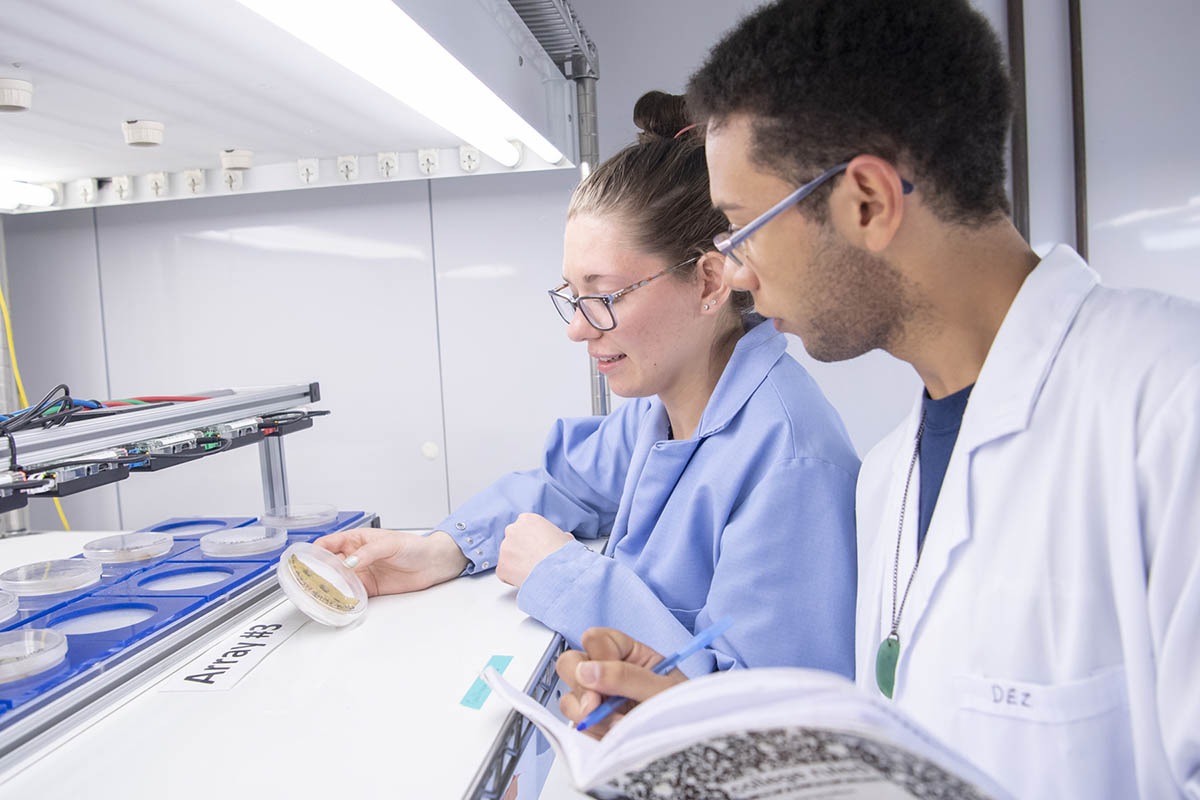
As Director of the Fusarium Research Center at Penn State, I also curate the world's largest collection of cultures of Fusarium, one of the most important genera of toxigenic and pathogenic fungi. We are nearing 20,000 accessions and provide isolates to certified researchers, and also provide identification and other services. Most of the research in my lab naturally involves this important genus, but I am also involved in projects in a variety of other fungi.

Recent Publications

Schoch, C.L., and 64 co-authors. 2009. The Ascomycota Tree of Life: A phylum-wide phylogeny clarifies the origin and evolution of fundamental reproductive and ecological traits. Syst. Biol. 58: 224-239.

Schroers, H. J., O'Donnell, K., Lamprecht, S.C., Kammemeyer, P.L., Johnson, S., Sutton, D.A., Rinaldi, M.G., Geiser, D.M., and Summerbell, R.C. 2009. Taxonomy and phylogeny of the Fusarium dimerum species group. Mycologia 101: 44-70.

Nalim, F.A., Elmer, W.H., McGovern, R.J. and Geiser, D.M. 2009. Multilocus phylogenetic diversity of Fusarium avenaceum pathogenic on lisianthus. Phytopathology. 99: 462-468.

Rivera, V., Rengifo, J., Khan, M., Geiser, D.M., Mansfield, M., Secor, G. 2008. First report of a novel Fusarium species causing yellowing decline of sugar beet in Minnesota. Plant Disease 92: 1589-1589.

O'Donnell, K., Sutton, D.A., Fothergill, A., McCarthy, D., Rinaldi, M.G., Brandt, M.E., Zhang, N. and Geiser, D.M. 2008. Molecular phylogenetic diversity, multilocus haplotype nomenclature and in vitro antifungal resistance within the Fusarium solani species complex. J. Clin. Microbiol. 46: 2477-2490.

Park, J. and 28 co-authors. 2008. Phytophthora database: A forensic database supporting the identification and monitoring of Phytophthora. Plant Dis. 92: 966-972.

Geiser, D.M. 2009. Sexual structures in Aspergillus: morphology, importance and genomics. Medical Mycology, 47: S21-S26.

Zhang, N., Geiser, D.M. and Smart, C.D. 2007. Macroarray detection of solanaceous plant pathogens in the Fusarium solani species complex. Plant Disease 91: 1612-1620.

Ward, T.J., Clear, R.M., Rooney, A.J., O'Donnell, K., Gaba, D., Patrick, S. Starkey, D.E., Gilbert, J., Geiser, D.M. and Nowicki, T. 2007. An adaptive evolutionary shift in Fusarium head blight pathogen populations is driving the rapid spread of more toxigenic Fusarium graminearum in North America. Fungal Genetics and Biology 45: 473-484.

Samson, R.A., Varga, J., Witiak, S.M. and Geiser, D.M. 2007. The species concept in Aspergillus: recommendations of an international panel. Studies in Mycology. 59: 71-73.

Geiser, D.M., Klich, M.A., Frisvad, J.C., Peterson, S.W., Varga, J. and Samson, R.A. 2007. The current status of species recognition and identification in Aspergillus. Studies in Mycology. 59: 1-10.

Geiser, D.M., Samson, R.A., Varga, J., Rokas, A. and Witiak, S.M. 2008. A review of molecular phylogenetics in Aspergillus, and prospects for a robust genus-wide phylogeny. Pp. 17-32 in Aspergillus in the genomics era, Varga, J. and Samson, R.A. eds. Wageningen Academic Publishers, Wageningen, The Netherlands.

Blair, J.E., Coffey, M.D., Park, S-Y, Geiser, D.M. and Kang, S. 2008. A multilocus phylogeny for Phytophthora utilizing markers derived from complete genome sequences. Fungal Genet. Biol. 45: 266-267.

Cox-Foster, D.L., Conlan, S., Holmes, E.C., Palacios, G., Evans, J.D., Moran, N.A., Quan, P-L, Briese, T., Geiser, D.M., Martinson, V., van Engelsdorp, D., Kalkstein, A.L., Drysdale, A., Hui, J., Zhai, J., Cui, L., Hutchinson, S., Simons, J.F., Egholm, M., Pettis, J.S., and Lipkin, W.I. 2007. A metagenomic survey of microbes in honeybee colony collapse disorder. Science, 318: 283-287.

Ploetz, R.C., Palmateer, A.J., Geiser, D.M., and Juba, J.H. 2007. First report of Fusarium wilt caused by Fusarium oxysporum on roselle in the United States. Plant Dis. 91: 639.

O'Donnell, K., Sarver, B.A.J., Sutton, D.A., Benjamin, L., Lindsley, M., Padhye, A., Geiser, D.M. and Ward, T.J. 2007. Phylogenetic diversity and microsphere array-based genotyping of human pathogenic fusaria, including isolates from the 2005-06 multistate contact lens-associated US keratitis outbreaks. J. Clin. Microbiol., 45: 2235-2248.

Hibbett, D.S. and 67 co-authors. 2007. A higher-level phylogenetic classification of the Fungi. Mycological Research, 111: 509-547.

Starkey, D.E., Ward, T.J., Aoki, T., Gale, L.R., Kistler, H.C., Geiser, D.M., Suga, H., Toth, B., Varga, J. and O'Donnell, K. 2007. Global molecular surveillance reveals novel Fusarium Head Blight species and trichothecene toxin diversity. Fungal Genetics and Biology, 1191-1204.

Covert, S.F., Aoki, T., O'Donnell, K., Starkey, D.E., Holliday, A., Geiser, D.M., Cheung, F., Town, C., Strom, A., Juba, J., Scandiani, M. and Yang, X.B. 2007. Sexual reproduction in the soybean sudden death syndrome pathogen Fusarium tucumaniae. Fungal Genetics and Biology, 44: 799-807.

Overton, B.E., Stewart, E.L. and Geiser, D.M. 2006. Taxonomy and phylogenetic relationships of nine species of Hypocrea with anamorphs assignable to Trichoderma. Stud. Mycol. 56: 39-65.

Overton, B.E., Stewart, E.L., Geiser, D.M., and Jaklitsch, W.M. 2006. Systematics of Hypocrea citrina and related taxa. Stud. Mycol. 56; 1-38.

James, T.Y., and 69 co-authors. 2006. Reconstructing the early evolution of Fungi using a six-gene phylogeny. Nature 443: 818-822.

Kang, S., Blair, J.E., Geiser, D.M., Khang, C-H, Park, S-Y, Gahegan, M., O'Donnell, K., Luster, D.G., Kim, S-H, Ivors, K.L., Lee, Y-H, Lee, Y-W, Grunwald, N.J., Martin, F.M., Coffey, M.D., Veeraraghavan, N., and Makalowska, I. 2006. Plant pathogen culture collections: It takes a village to preserve these resources vital to the advancement of agricultural security and plant pathology. Phytopathology 96: 920-925.

Geiser, D.M., Gueidan, C., Miadlikowska, J., Lutzoni, F., Kauff, F., Hofstetter, V., Fraker, E., Schoch, C.L., Tibell, L., Untereiner, W.A., and Aptroot, A. 2006. Eurotiomycetes: Eurotiomycetidae and Chaetothyriomycetidae. Mycologia 98: 1053-1064.

Spatafora, J.W., and 32 co-authors. 2006. A five-gene phylogeny of the Pezizomycotina. Mycologia 98: 1018-1028.

Zhang, N., O'Donnell, K., Sutton, D.A., Nalim, F.A., Summerbell, R.C., Padhye, A.A., and Geiser, D.M. 2006. Members of the Fusarium solani species complex causing infections in both humans and plants are common in the environment. J. Clin. Microbiol., 44: 2186-2190.


David M. Geiser

Plant Pathology Home | Educational Programs | Research | General Public | Plant Management Network | News & Events |
Featured Publications | Alumni & Friends | People
| College of Agricultural Sciences | Penn State

Copyright Information
This publication is available in alternative media on request.
Penn State is committed to affirmative action, equal opportunity, and the diversity of its workforce.
Please e-mail us with your questions, comments, or suggestions at mat1@psu.edu.
Last modified Friday, November 27, 2009
The Pennsylvania State University The College of Agricultural Sciences Research Educational Resources Extension Resources About Our Department The Department of Plant Pathology The College of Agricultural Sciences